
Facebook affiliate marketing is a form of performance-based marketing in which you earn a commission by promoting the products and services of other companies on Facebook.
With over 3 billion monthly active users (DataReportal, 2025), Facebook remains the largest social network and a prime channel for affiliate publishers.
Facebook allows you to build communities around specific niches, making it easier to create attention around a specific product or service. This, in turn, helps you drive clicks and potential sales for the affiliate program to which you belong.
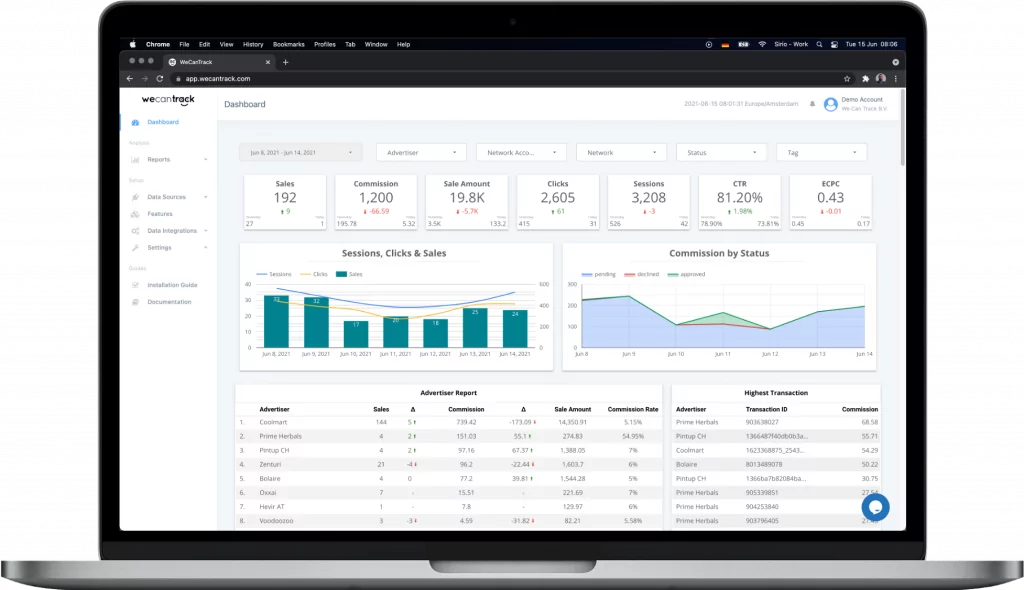
This article covers how to use Facebook for affiliate marketing, set up your affiliate marketing strategy, track conversions with wecantrack, and apply the best practices for Facebook affiliate marketing.
Table of Contents
Understanding Facebook Affiliate Marketing
There are two primary players in Facebook affiliate marketing the affiliates and the merchants. Affiliates are responsible for creating content (posts, videos, etc.) and promoting different products or services.Β
The merchant is the company or business offering the opportunity to promote their products or services. They determine the commission structure and may provide you with some marketing materials to help you on your journey.Β
Commission StructuresΒ
There are a variety of different ways you can earn a commission as a Facebook affiliate marketer. These include:Β
- Pay-Per-Sale (PPS): This is the most common commission structure. You earn a commission only when someone clicks on your affiliate link and then completes a purchase on the merchantβs website.
- Pay-Per-Click (PPC): For this commission structure, you earn a commission every time someone clicks on your affiliate link, regardless of whether they make a purchase or not. This is less common but can be beneficial for driving traffic to the merchantβs site.
- Other Models: These include programs that offer a combination of PPS and PPC, as well as those that offer tiered commissions that are based on overall sales volume.
Tracking Affiliate PerformanceΒ
Keeping track of your results is crucial to ensure your Facebook affiliate marketing strategy works optimally. There are a few things you need to know:
- Clicks and Conversions: The majority of the affiliate programs provide tools for tracking clicks on your affiliate links. Facebook offers an ad manager that allows you to track the performance of your advertisements. Keeping track of these metrics is vital to ensure your content receives engagement.
- Monitoring Affiliate Income: Merchants that have affiliate programs will typically have dashboards on their websites that allow you to track the commission you have earned.
- Assessing Performance: Use the data you have collected to help you understand what content resonates with your audience and what ads perform best. This is crucial for optimizing future campaigns and promotions.
Using Facebook for Affiliate Marketing
Facebook is a strong channel for promoting affiliate products and services. It offers a massive audience for affiliate marketers to reach, and the affiliate marketing industry reached $14.2 billion in 2023 (Statista, 2024), with Facebook ads driving a significant portion of paid affiliate traffic.
Affiliate marketers can use Facebook to share various types of content, including posts, stories, groups, live videos, Reels, and Messenger communication. These formats allow Facebook affiliate marketers to engage with their audience in many ways and build a solid online presence.
There are two primary ways you can promote affiliate products on Facebook:
- Organic Posting: This involves creating engaging content (text posts, images, videos) related to the promoted product and sharing it strategically on your Facebook page, in relevant groups, or both. You can organically build a community around your niche and weave in affiliate promotions.
- Facebook Ads: Paid advertising allows you to target a highly specific audience interested in the products you promote. You can create targeted ad campaigns to drive traffic to your website (containing your affiliate links) or even landing pages specifically designed for the promotion.
Facebook Reels and Stories for Affiliates
Facebook Reels and Stories have become two of the most effective content formats for affiliate marketers. Reels appear prominently in the Facebook feed and can reach users beyond your existing followers through algorithmic recommendations.
For affiliates, Reels work well for product demonstrations, unboxings, before/after comparisons, and tutorial-style content. Stories, on the other hand, create urgency with their 24-hour lifespan and support direct link stickers that send viewers straight to your affiliate landing pages.
Best practices for affiliate Reels and Stories:
- Hook in the first 2 seconds. Open with the result, not the setup. Show the product in action immediately.
- Keep Reels under 60 seconds. Shorter Reels get more replays and shares, which improves distribution.
- Use Stories for limited-time promotions. The disappearing format drives urgency and click-throughs on time-sensitive offers.
- Add captions. Most users watch with sound off. Captions keep viewers engaged.
Meta Ad Policies for Affiliate Links
Facebook (Meta) does not prohibit affiliate marketing in ads, but there are specific policies to follow:
- No direct affiliate links in ads. You cannot place raw affiliate URLs as the ad destination. Instead, direct users to a landing page, bridge page, or your own content page that contains the affiliate links.
- Disclose affiliate relationships. Meta requires transparency. Add a disclosure to your landing page or ad copy stating that you may earn a commission from purchases.
- Avoid prohibited content. Certain niches (cryptocurrency, supplements, get-rich-quick schemes) face stricter review. Check Meta’s Advertising Standards before running campaigns.
- Quality landing pages required. Meta penalizes ads that send users to low-quality pages with excessive pop-ups, misleading claims, or minimal content.
Selling expensive products means targeting the right people. Affiliates can do this by making special content, emphasizing why the product is worth it, and using customer reviews to show it's a good buy.
Creating Your Facebook Audience
Your affiliate link is completely useless without an audience to advertise your affiliate products or services. You can build this audience in many ways, but the number one way on Facebook is to create a group around the specific target audience.Β
Creating your own Facebook group offers an array of advantages, especially for affiliate marketers:Β
- Organic Reach: Unlike pages, groups provide better organic reach. Your content reaches members directly without relying on algorithms.
- Brand Advocates: Groups allow you to build a loyal community around your brand or cause.
- Free Promotions: Engaged members often share your content, leading to free promotions.
- Honest Feedback: Groups facilitate direct conversations with your audience, providing valuable feedback.
Remember, the key elements to creating a successful Facebook group include choosing a relevant and catchy name, crafting a clear and concise description, actively promoting your group, maintaining consistent engagement, and effectively moderating your group to ensure a positive and respectful environment.
With all these elements combined, you will be well on your way to creating a thriving and highly engaged group.Β
Facebook Ads Conversion Tracking With wecantrack
If you run paid Facebook campaigns to your affiliate content, you need conversion data flowing back into Facebook Ads Manager. Without it, Facebook’s algorithm optimizes on clicks, not on actual revenue.
wecantrack solves this by connecting your affiliate networks to Facebook’s Conversions API. Here is how it works:
- Connect your affiliate networks. wecantrack integrates with 450+ affiliate networks and pulls conversion data automatically via API, postback, or scraping.
- Install the tracking script. Add the wecantrack JavaScript tag or WordPress plugin to your site. This captures click data (SubIDs, UTMs, landing pages) and attributes conversions to traffic sources.
- Link your Facebook Pixel. Connect your Pixel to wecantrack, and every confirmed affiliate conversion is sent to Facebook Ads Manager as a purchase event via the Conversions API.
- Optimize for purchases. With real conversion data in Facebook Ads, you can set your campaign objective to “Purchase” and let Facebook’s machine learning find more buyers, not just clickers.
Publishers using this setup have reported significant improvements in ROAS because Facebook’s bidding algorithm finally has the data it needs. Learn more on our Facebook Ads integration page.
Best Practices for Affiliate Marketing on Facebook
There are a few important best practices to consider when using Facebook for affiliate marketing. These are by no means gospel, but they will definitely help you on your journey to success.Β
- It is important to let your audience know that you are involved in an affiliate marketing partnership if you are promoting products. This helps to create trust between you and your audience, as it shows them you are transparent.
- Avoid being spammy. Spammy tactics can deter your audience from engaging and deter potential newcomers from becoming a part of your audience. Focus on creating useful and engaging content that is relevant to the interests of your audience.
- Test and optimize your strategy. This is key to helping you find the most effective approach to marketing your affiliate program. There are various ways you can go about this, from A/B testing and analyzing metrics to making performance-based adjustments to your marketing plan.Β
- Staying up to date with Facebookβs policy changes is important to ensure you are complying with the platform’s guidelines.Β
Final Word
Affiliate marketing on Facebook can be very lucrative. The network’s massive audience and its ability to target niche audiences make it a strong channel for affiliate marketers at any level. To establish trust and credibility, provide valuable content and build genuine relationships with your audience.
Diversify your approach with Facebook’s tools:
- Use ad formats, Reels, Stories, and Groups
- Track conversions through wecantrack to measure revenue
- Capture strong ROI. For every $1 spent, affiliates average $6.50 return
Frequently Asked Questions
Can I use affiliate links directly in Facebook ads?
No. Meta's advertising policies prohibit placing raw affiliate links as ad destinations. Instead, direct users to a landing page, bridge page, or your own content page that contains the affiliate links. The landing page should provide genuine value and context about the product, not just redirect to the merchant. Violating this policy can result in ad rejection or account suspension.
What is the best way to promote affiliate products on Facebook?
The most effective approach combines organic content with paid ads. Build a Facebook Group around your niche to create a loyal audience that trusts your recommendations. Post genuine product reviews, comparisons, and tutorials. Then use Facebook Ads to scale what works, targeting specific demographics interested in your niche. Reels and Stories drive the highest engagement for affiliate content in 2026.
How do I track affiliate conversions from Facebook ads?
Connect your affiliate networks to wecantrack, install the tracking script on your site, and link your Facebook Pixel. wecantrack sends confirmed affiliate conversions to Facebook Ads Manager as purchase events via the Conversions API. This lets you optimize campaigns for actual revenue rather than clicks, which significantly improves ROAS over time.
Do I need a Facebook Page or Group for affiliate marketing?
A Facebook Group is the stronger option for organic affiliate marketing. Groups provide better organic reach than Pages because your posts appear directly in members' feeds. They also create a community dynamic where members interact, ask questions, and share content, building trust around your recommendations. You can run ads without either, but having a Group gives you a free, engaged audience to promote to alongside paid campaigns.
How much can I earn with Facebook affiliate marketing?
Earnings vary widely based on niche, audience size, and traffic quality. Affiliates running paid Facebook campaigns with proper conversion tracking typically earn $0.50 to $5+ per click in commissions, depending on the affiliate program's payout structure. The affiliate marketing industry generates $14.2 billion globally (Statista, 2024), and Facebook is one of the top paid traffic sources. The key factor is tracking ROI: if your ad spend exceeds your commissions, scale back and optimize before spending more.